 How-to
Can You Skip Trace a Debtor in a Remote Area?
Last Updated: November 18, 2026
Quick Summary
Remote area skip tracing means locating a debtor outside major population centres, where data trails thin out fast. You combine database and public records checks with local enquiries, then verify every candidate address before anyone attends. When desk research stalls, escalate to field investigation.
- Remote traces break down through stale records, silent moves and thin local data.
- Build a profile with name, date of birth, last known address, employer and prior addresses.
- Treat two independent sources agreeing on an address as the trigger to verify.
- Never treat a single database match as verification; one unconfirmed record is only a lead.
- Re-run desk research after a reasonable interval when a trace is inconclusive, and document what you tried.
Table of Contents
- Why Remote Area Debtors Are Harder to Trace
- Skip Tracing Methods That Work Beyond the Metro Fringe
- Debtor Address Verification Before Anyone Knocks
- Debt Recovery After Locating a Debtor in a Regional Area
- Frequently Asked Questions
Why Remote Area Debtors Are Harder to Trace
Remote area skip tracing means locating someone who owes money outside major population centres. It is harder than metro tracing because the usual data trails thin out fast.
Fewer recent records exist, addresses change without a paper trail, and local knowledge matters more than database volume. A debtor who has moved to a rural property may leave almost no digital footprint.
Three things break a remote trace:
- Stale records. Utility and credit files often lag behind a genuine move.
- Silent moves. People relocate and never update a mailing address.
- Thin local data. Small towns generate fewer formal records.
A common mistake is treating a database hit as a confirmed location. Our guide to skip tracing in remote regional Australia sets out how these gaps form.
Skip Tracing Methods That Work Beyond the Metro Fringe
Remote area skip tracing methods combine desk research with local enquiries. Database searches, public records and data matching give you candidates, rarely certainty.
A practical workflow looks like this:
- Build the profile. Collect full name, date of birth, last known address, employer and prior addresses.
- Run database and public records checks. Match against electoral and property records where permitted.
- Cross-check every candidate. Confirm identity before treating an address as real.
- Escalate to field investigation. Use local enquiries when desk research stalls.
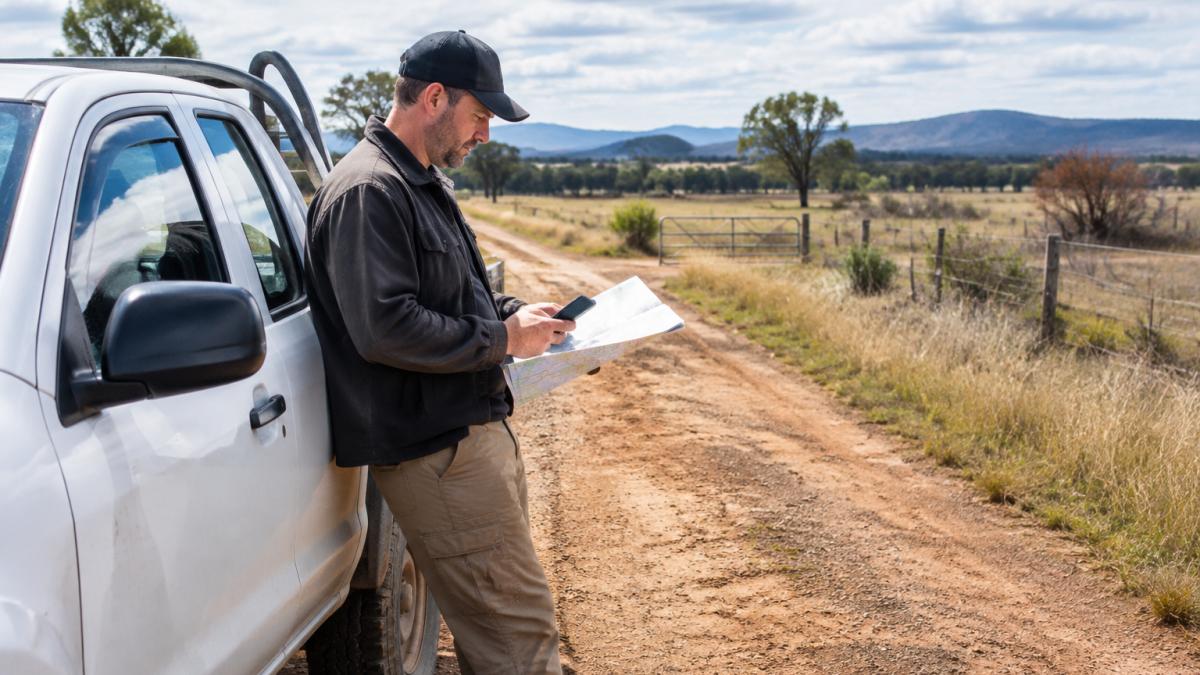
Deciding when to escalate is the real skill. If two independent sources agree on an address, verify it. If nothing lines up, field work is the only path forward. Our step-by-step guide to effective skip tracing in difficult cases walks through that decision, and our breakdown of skip tracing success rates for debtors covers what to expect.
Here is the practical workflow we follow when tracing a debtor beyond the metro fringe.
| Step | What to do |
|---|---|
| 1 | Build the profile: name, date of birth, last known address, employer, prior addresses |
| 2 | Run database and public records checks, including electoral and property records where permitted |
| 3 | Cross-check every candidate and confirm identity before treating an address as real |
| 4 | Escalate to field investigation when desk research stalls |
Debtor Address Verification Before Anyone Knocks
Address verification separates a useful trace from an expensive mistake: you confirm the person named in the file actually lives there before anyone attends.
Verification works best as a checklist:
- Name matches the person on file, not a relative
- Address is current, not a previous address
- Occupancy is confirmed by an independent source
- Contact details are checked against at least two records
- Location report records the source and date of each finding
Skipping this step costs money. A process server who attends the wrong address wastes a fee and delays service; a recovery agent who knocks on a stranger's door creates a complaint. Our guide on how to hire a professional skip tracer for assets covers the three steps.
Watch out: never treat a single database match as verification. One unconfirmed record is a lead, not a location.
Debt Recovery After Locating a Debtor in a Regional Area
Recovery begins once the address is verified, and the approach changes in regional areas. Distances are longer, so every attendance must be planned rather than improvised.
The sequence we follow:
- Confirm the debtor's identity and current address.
- Issue written contact to the verified address.
- Arrange service of process or vehicle recovery through a local agent.
- Record the outcome and escalate to legal action if contact fails.
Privacy and responsible contact matter here. Debt collection is subject to Australian privacy law and fair-conduct expectations, so contact should be proportionate and documented. Our guide to legal compliance for debt collection services explains the obligations that apply. Office of the Australian Information Commissioner guidance on privacy sets out the underlying privacy principles.
When a trace is inconclusive, do not force it. Re-run desk research after a reasonable interval, check for a new address, and document what you tried. A clear record of an unsuccessful trace is still valuable in court.
Locating a debtor in a remote area takes patience and verified steps, not guesswork. Rapid Mercantile Services works on a no result, no charge basis, and we have recovered over 800 vehicles since we started in 2025. Rental car companies including Avis, Budget, Bargain Car Rentals, Red Spot, Sixt, Alamo and Enterprise use our services. We handle skip tracing, process service and vehicle recovery. Get in touch with Rapid Mercantile Services to discuss an unreturned vehicle or missing debtor.
Frequently Asked Questions
How do you locate a debtor who has moved to a remote area?
Start with what you already hold: the last known address, phone number and any employer details. From there, remote area skip tracing combines database searches, public records analysis and data matching to build a trail of previous addresses. When the trail goes cold, local enquiries and field investigation confirm whether the person is actually there. Verification matters more in remote areas because a wrong address wastes days of travel, so treat every lead as unconfirmed until it is checked.
What information is useful when tracing a missing debtor?
The more starting points you can supply, the faster a trace moves. Useful details include the debtor's full name and date of birth, last known residential address, phone number and email address, previous addresses, employer or business connections, and any vehicle or asset details you hold. Even a partial match, such as a former address in a nearby town, can open up records analysis and data matching that narrow the search considerably.
What happens if a remote trace comes back inconclusive?
An inconclusive trace is not the end of the matter. A professional investigator will report what was checked, what was ruled out and where the gaps sit, so you can decide whether to fund further field investigation or pause the file. Under a no result, no charge model, you are not billed for a search that fails to locate the debtor. That structure makes it practical to attempt difficult remote cases without carrying the cost of dead ends.