 Listicle
How to Weigh the Benefits of Outsourcing Vehicle Repossession
Last Updated: November 10, 2026
Quick Summary
Outsourcing vehicle repossession converts fixed in-house costs like salaries, vehicles and insurance into variable per-job charges, so you pay only when a recovery is needed. It also gives you wider regional coverage and skip tracing expertise without adding staff or idle capacity.
- In-house teams carry salaries, vehicles, equipment and insurance whether or not a car goes missing.
- Outsourced recovery follows a defined sequence: instruction, location, recovery, storage, documentation and return or remarketing.
- The most common failure in outsourced recovery is a weak instruction brief missing contracts and correspondence history.
- Ask providers how they handle a located vehicle whose borrower refuses to hand over the keys.
- Rapid Mercantile Services works on a no result, no charge basis and has recovered over 800 vehicles since 2025.
Table of Contents
- Why Outsourcing Vehicle Repossession Changes the Cost Equation
- Rental Car Recovery Services: What a Specialist Provider Actually Handles
- The Vehicle Repossession Process Under an Outsourced Model
- In-House vs Outsourced Fleet Management: Pros and Cons
- Frequently Asked Questions
Why Outsourcing Vehicle Repossession Changes the Cost Equation
Outsourcing vehicle repossession means handing recovery, skip tracing and documentation to a specialist provider instead of using your own staff. Unreturned rental vehicles tie up capital, and the true cost sits in staff hours, downtime and delayed remarketing.
The financial case rests on converting fixed costs into variable ones. To see what professional vehicle recovery service pricing actually costs, compare it against your in-house figures before deciding. An in-house team carries salaries, vehicles, equipment and insurance whether or not a car goes missing; a specialist provider charges per job. Steady volumes can suit in-house, but when volumes swing, the outsourced model absorbs the swing without idle capacity.
Australian Securities and Investments Commission guidance on credit and debt collection sets the compliance backdrop for anyone recovering secured assets, whether the work is done in-house or by a provider.
Rental Car Recovery Services: What a Specialist Provider Actually Handles
Rental car recovery services cover the full chain from locating a missing vehicle to returning it to the fleet: skip tracing, field visits and physical recovery.
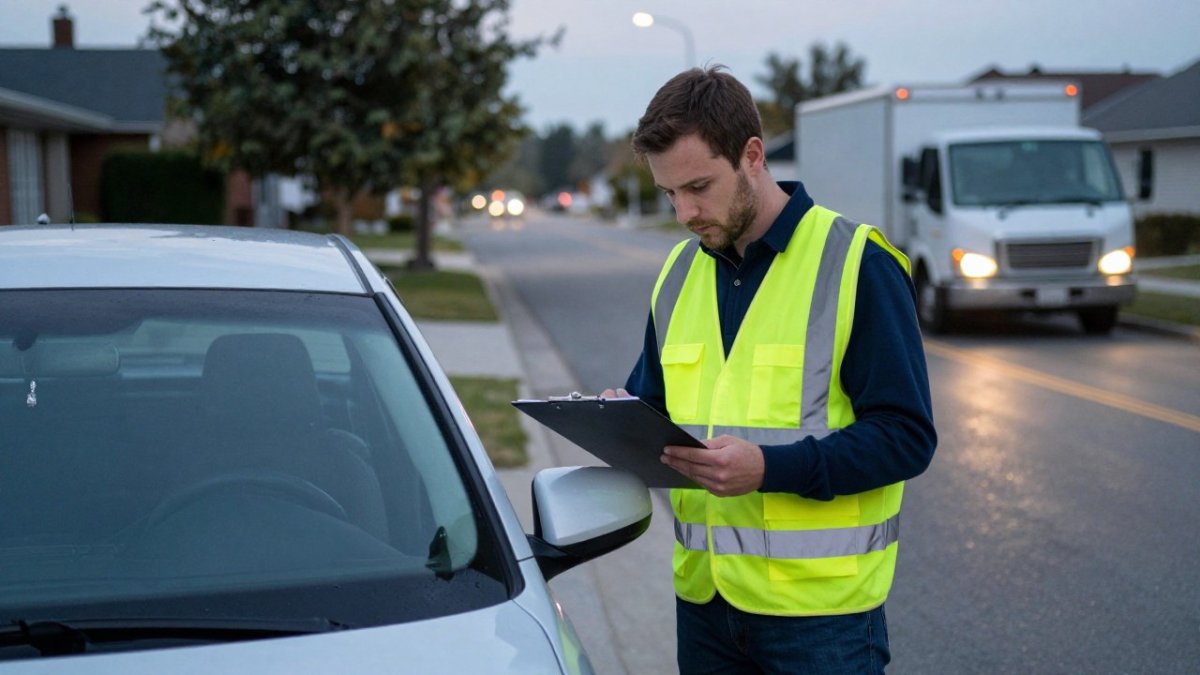
Skip tracing for vehicle recovery is the investigative step that makes the rest possible. Providers cross-check contact records, registration data and public information to establish where a vehicle or borrower is likely to be. For stolen vehicles, our guide to recovering stolen rental cars explains how specialists approach those cases.
Best for: fleets with vehicles spread across multiple regions and no dedicated recovery staff. Skip if: you run a small metro-only fleet with near-zero unreturned vehicles and a staff member who can absorb the work.
The Vehicle Repossession Process Under an Outsourced Model
The vehicle repossession process under an outsourced model follows a defined sequence: instruction, location, recovery, storage, documentation and return or remarketing. Each stage produces a record that matters if a borrower disputes the recovery or the matter proceeds to court.
Locating the vehicle is usually the bottleneck. Providers that invest in skip tracing resolve cases faster, and understanding skip tracing success rates for debtors helps you set realistic expectations. A provider should state upfront what happens when a debtor cannot be located, and whether you are charged for an unsuccessful attempt.
Watch out: the most common failure in outsourced recovery is a weak instruction brief. Hand over a file without the loan contract, correspondence history and known aliases, and the case drags.
In-House vs Outsourced Fleet Management: Pros and Cons
In-house versus outsourced fleet management comes down to control against flexibility. Neither model wins outright; the right choice depends on your volume, geography and spare administrative capacity.
| Factor | In-House | Outsourced |
|---|---|---|
| Cost structure | Fixed salaries and equipment | Variable, per-job charges |
| Coverage | Limited to your regions | Wider reach across regions |
| Control | Direct oversight | Requires vendor management |
| Compliance | Your team's responsibility | Shared, with documented handover |
| Scalability | Slow to expand | Adjusts to volume |
| Reporting | Built to your format | Depends on provider's systems |
The in-house case is strongest with consistent volume and a metro footprint. You keep direct control and avoid per-job charges, but idle capacity costs money.
The outsourced case is strongest when volumes are unpredictable or spread across regions. You avoid capital outlay, but you take on vendor oversight: someone must check that service levels are met and documentation is complete.
A common mistake is choosing a provider on headline rate alone. Ask instead how they handle a case where the vehicle is located but the borrower refuses to hand over the keys, the answer reveals more than any quote.
Recovering unreturned vehicles should not consume your fleet team's week. Rapid Mercantile Services works on a no result, no charge basis, has recovered over 800 vehicles since we started in 2025, and counts Avis, Budget, Bargain Car Rentals, Red Spot, Sixt, Alamo and Enterprise among the rental companies using our services. We handle skip tracing and field recovery so your team stays focused on fleet operations. Get started with Rapid Mercantile Services and turn an unreturned vehicle into a resolved file.
Frequently Asked Questions
What are the benefits of outsourcing vehicle repossession?
The main benefits are cost control and speed. You swap fixed in-house overheads for a variable cost per job, so quiet months do not drain the budget. Rapid Mercantile Services works on a no result, no charge basis, so you only pay when a vehicle is actually recovered.
How does skip tracing for vehicle recovery help with hard-to-locate vehicles?
Skip tracing uses multiple data sources to find a borrower who has moved, changed phone numbers or is deliberately avoiding contact. Ask any provider how they handle regional and remote locations, since metro-only coverage limits how useful their skip tracing for vehicle recovery really is.
What are the risks of outsourcing vehicle repossession and how do you manage them?
The main risks are loss of control over how borrowers are treated, weak documentation if a recovery is disputed, and a provider that misses service levels. Manage them with a written agreement covering agreed reporting and service levels. Ask for sample reports and check how complaints are logged. Retained lender responsibilities do not disappear when you outsource, so keep oversight of vendor performance and review recovery rates and cost per recovery regularly.